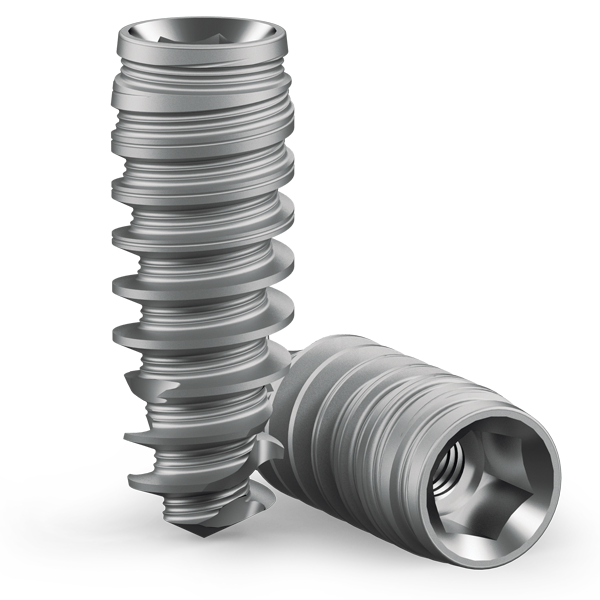
Dental Implants
Dental Implants
Certificates:CDSCOIAFISOTUV
Rangareddi, TG
Storefront →Price on request
MOQ — Lead time on requestCurrency INR
Customization for this product
Tailored solutions for diverse medical needs.
BharatSeal order protection
Secure payments
Every payment is processed via Razorpay with PCI-DSS data protection and SSL encryption. We never see your card details.
PayUPIVisaMCAmexRuPayNet BankingWalletsPay Later+ more
Money-back protection
Claim a refund if your order doesn't ship, arrives damaged, or doesn't match the agreed spec. Disputes resolved within 7 working days.
Trade Assurance — not yet enrolled by this seller
This seller has not yet activated Trade Assurance. Pay outside BharatSeal at your own risk — we recommend chatting first to verify.
Only orders placed and paid through BharatSeal can enjoy free protection by 🛡 BharatSeal Trade Assurance.
Highlights at a glance
- ✓Category: Dental Implants
- ✓Made in Rangareddi, TG, India
- ✓Certified: CDSCO, IAF, ISO
About this item
- Robust primary stability and easy integration
- Engineered for immediate and delayed loading
- Enhance patient outcomes in both straightforward and complex scenarios
Description
Our range of dental implants is designed to meet diverse clinical requirements with precision and reliability. From our AICON series, which features diameters ranging from 3.6mm to 5.5mm and lengths from 6mm to 16mm, each implant ensures robust primary stability and easy integration. Engineered for immediate and delayed loading, our implants are crafted to enhance patient outcomes in both straightforward and complex scenarios.
Innovative Implant Designs: Enhancing Patient Outcomes with Cutting-Edge Technology
In the rapidly changing field of dental care, innovation is no longer a luxury. It's a necessity. Here’s a deeper look at some of the latest implant technology and how it’s fulfilling all our desires.“Implant technology: Latest breakthroughs in dental implants have arrived as dental professionals and patients continue to crave better, more efficient and permanent solutions for missing teeth.
However, underlying this change is clearly the aim of better outcomes for patients. New implant designs are faster healing and better at integrating with the jawbone.
### The Transition from Traditional to Innovative
Traditional implants have worked well for decades, but like any medical technology, the quest for improved outcomes has forced a reconsideration of what’s possible.
Contemporary implant systems are not about a screw in the jaw. They’re about bioengineering. Each angle, groove, and texture serves a purpose. Whether it’s to replicate what natural bone looks and feels like, to promote osseointegration, or to minimize patient downtime.
### 1. Biomimetic Surfaces: How to Make an Implant Feel Like a Home StandComfort
Biomimetic surface technology is a major advancement in implant design. These novel textures and coatings are designed to emulate the micro - and nano - topography of native bone. Why does this matter?
Because the body “sees” the implant as a friend, not a foe.
Bone-anchored implant surfaces speed up the healing process as well as improving long-term stability by promoting osseointegration-the biological connection between the implant and bone. Our newest implants also feature our proprietary nano-coating designed to promote the cellular response and direct bone cells to grow around the implant more quickly and more securely.
### 2. Tapered, Dual-Thread Style: Ready for Immediate Stability
A problem with the implants is that they do not achieve primary stability - the initial mechanical grip in the jawbone before the biological bonding is established. Our newest tapered implants with dual-thread patterns take this on directly.
The taper replicates the form of a natural tooth root, giving an anatomical form that helps in cases of limited bone volume. The presence of two threads makes it easier to insert with the minimal trauma and most importantly better distribution of torque. This translates to improved weight-bearing and less chance for micromotions during healing.
### 3. Platform Switching: A Small Game for a Big Gain
Although it may seem like a small design change, platform switching, when the abutment is narrower than the implant platform has made a huge difference in preserving bone and soft tissue.
By positioning the implant-abutment junction more towards the center of the implant, platform switching reduces bone recession around the implant shoulder and promotes the stability of soft tissues. The result? Better, healthier gums and prettier aesthetics, particularly on the smile line.
### 4. Smart Implants: The era of Digital Integration
Think of an implant that can explain itself to you.
In no way mature yet, smart implant technology is going forwards with embedded sensors that can monitor healing, report infection and feedback in real time. Today, we are testing designs that talk to external devices via Bluetooth, giving a tantalizing glimpse at a future when patients and their clinicians are more informed than ever.
### 5. One-Piece vs. Two-Piece Implants: The Design Debate
Both have their supporters, but in recent years the preference has been for better two-piece mechanisms that can be more readily adapted. Our latest range has a cone shape with internal indexing to help prevent any little wobbles and micro-gaps that could trap bacteria.
For individual situations such as narrow ridges or single-stage extraction surgeries, our newly designed one-piece implant that integrates the abutment offers an integrated, low-profile, and unarmed implant with an outstanding clinical outcome.
### 6. Patient-Centric Design: It’s Personal
But beyond product species, that's what all of our innovations boil down to: How does this make the patient experience better?
Whether it’s faster surgeries or less chair-time; increased post-op comfort; optimised long-term aesthetics - they have thought of it during every curve and thread.
Indeed, our design team encompasses not only biomedical engineers, but also clinicians in practice and patients’ feedback. It’s this loop that makes sure our designs aren’t only technically correct-they’re actually effective in real world use cases.
### The Result: Enhanced Patient Outcomes
- Healing in less time: Due to biomimetic surfaces as well as stable primary fixation.
- More Comfort: Enhanced abutment connections and less invasive placement procedures.
- Enhanced Aesthetics: Improved bone and soft tissue preservation with design elements such as platform switching.
- More Use: Engineered and constructed to last decades.
### Future Prospects: A Look Beyond Current Methods of Implant Design
AI and 3D printing are increasingly part of dentistry, and the next level is all about customization. Already, we’re devising systems that would enable a clinician to scan a patient’s mouth and receive an implanted tooth, specifically designed to bone density, anatomy and aesthetic preferences, in a matter of days.
With robotic-assisted surgery and regenerative coatings that encourage new bone growth, the dental implants of the future won’t merely be stand-ins for missing tee-they’ll restore confidence, health, and joy.
At Arka Medical Devices, we pride ourselves on pushing boundaries with research-driven, clinically-tested implant solutions. Our design team works closely with surgeons, engineers, and material scientists to create implants that not only integrate seamlessly with bone but also elevate the standard of care.
Clinical Tips for Long-Term Success with Dental Implants: From Placement to Maintenance
- Pre‑Operative Planning
- Comprehensive Patient Evaluation
- Medical history & risk assessment: Determine systemic diseases (e.g., diabetes, osteoporosis), medication (e.g., bisphosphonates), and habits (e.g., smoking, bruxism) that impact the osseointegration process.
- Clinical and radiographic examination CBCT images are used to assess the bone quality, volume, vital structures (sinus/nerves) and to identify occlusal problems.
- Digital planning with surgical guides: Use three dimensional implant planning software to achieve the most favorable implant position based on prosthetic outcome and bone anatomy.
- Treatment Strategy & Timing
- Immediate placement vs. delayed placement: Compare the advantages of immediate placement (preservation of bone and soft tissue) and the disadvantages such as primary stability and infection control.
- Staged bone augmentation: For inadequate bone volume, plan GBR or sinus lifts to restore solid bone structure.
- Patient counseling & informed consent.
- Educate the patient on duration of treatment, complications and the significance of oral hygiene and follow-up.
- Surgical Precision
- Atraumatic Soft‑Tissue Handling
- Preserve blood supply through gentle flap reflection or with flapless strategies when feasible.
- Maintain the periosteum and the accompanying blood supply for revascularization and stability of the bone.
- Achieving Primary Stability
- Prepare implant beds in stages-autopilot drilling before tapered instrument of implant design.
- For softer bone use tapered implants or bicortical bone, consi
Key attributes
Trade & shipping terms
Set by ARKA MEDICAL DEVICES PRIVATE LIMITED — the supplier's own terms.
Certificates
CDSCO
IAF
ISO
TUV
Reviews
Questions & answers
Ask the supplier — answers are visible to all buyers
No questions yet. Be the first to ask!
Know your supplier
ARKA MEDICAL DEVICES PRIVATE LIMITED
Unverified<1 yr on BharatSealRangareddi, Telangana
Orders completed
—
On-time delivery
—
Reorder rate
—
Year founded
2026
Staff size
—
Certifications
4
%22%2F%3E%3Ctext%20x%3D%2250%25%22%20y%3D%2250%25%22%20dominant-baseline%3D%22central%22%20text-anchor%3D%22middle%22%20font-family%3D%22'DM%20Sans'%2Csystem-ui%2Csans-serif%22%20font-weight%3D%22800%22%20font-size%3D%22126%22%20fill%3D%22%231a1a1a%22%20fill-opacity%3D%220.14%22%20letter-spacing%3D%22-2%22%3EDI%3C%2Ftext%3E%3C%2Fsvg%3E)
%22%2F%3E%3Ctext%20x%3D%2250%25%22%20y%3D%2250%25%22%20dominant-baseline%3D%22central%22%20text-anchor%3D%22middle%22%20font-family%3D%22'DM%20Sans'%2Csystem-ui%2Csans-serif%22%20font-weight%3D%22800%22%20font-size%3D%22126%22%20fill%3D%22%231a1a1a%22%20fill-opacity%3D%220.14%22%20letter-spacing%3D%22-2%22%3EDI%3C%2Ftext%3E%3C%2Fsvg%3E)
%22%2F%3E%3Ctext%20x%3D%2250%25%22%20y%3D%2250%25%22%20dominant-baseline%3D%22central%22%20text-anchor%3D%22middle%22%20font-family%3D%22'DM%20Sans'%2Csystem-ui%2Csans-serif%22%20font-weight%3D%22800%22%20font-size%3D%22126%22%20fill%3D%22%231a1a1a%22%20fill-opacity%3D%220.14%22%20letter-spacing%3D%22-2%22%3EDI%3C%2Ftext%3E%3C%2Fsvg%3E)
%22%2F%3E%3Ctext%20x%3D%2250%25%22%20y%3D%2250%25%22%20dominant-baseline%3D%22central%22%20text-anchor%3D%22middle%22%20font-family%3D%22'DM%20Sans'%2Csystem-ui%2Csans-serif%22%20font-weight%3D%22800%22%20font-size%3D%22126%22%20fill%3D%22%231a1a1a%22%20fill-opacity%3D%220.14%22%20letter-spacing%3D%22-2%22%3EDI%3C%2Ftext%3E%3C%2Fsvg%3E)
%22%2F%3E%3Ctext%20x%3D%2250%25%22%20y%3D%2250%25%22%20dominant-baseline%3D%22central%22%20text-anchor%3D%22middle%22%20font-family%3D%22'DM%20Sans'%2Csystem-ui%2Csans-serif%22%20font-weight%3D%22800%22%20font-size%3D%22126%22%20fill%3D%22%231a1a1a%22%20fill-opacity%3D%220.14%22%20letter-spacing%3D%22-2%22%3ESO%3C%2Ftext%3E%3C%2Fsvg%3E)
%22%2F%3E%3Ctext%20x%3D%2250%25%22%20y%3D%2250%25%22%20dominant-baseline%3D%22central%22%20text-anchor%3D%22middle%22%20font-family%3D%22'DM%20Sans'%2Csystem-ui%2Csans-serif%22%20font-weight%3D%22800%22%20font-size%3D%22126%22%20fill%3D%22%231a1a1a%22%20fill-opacity%3D%220.14%22%20letter-spacing%3D%22-2%22%3ESO%3C%2Ftext%3E%3C%2Fsvg%3E)