Activated Carbon
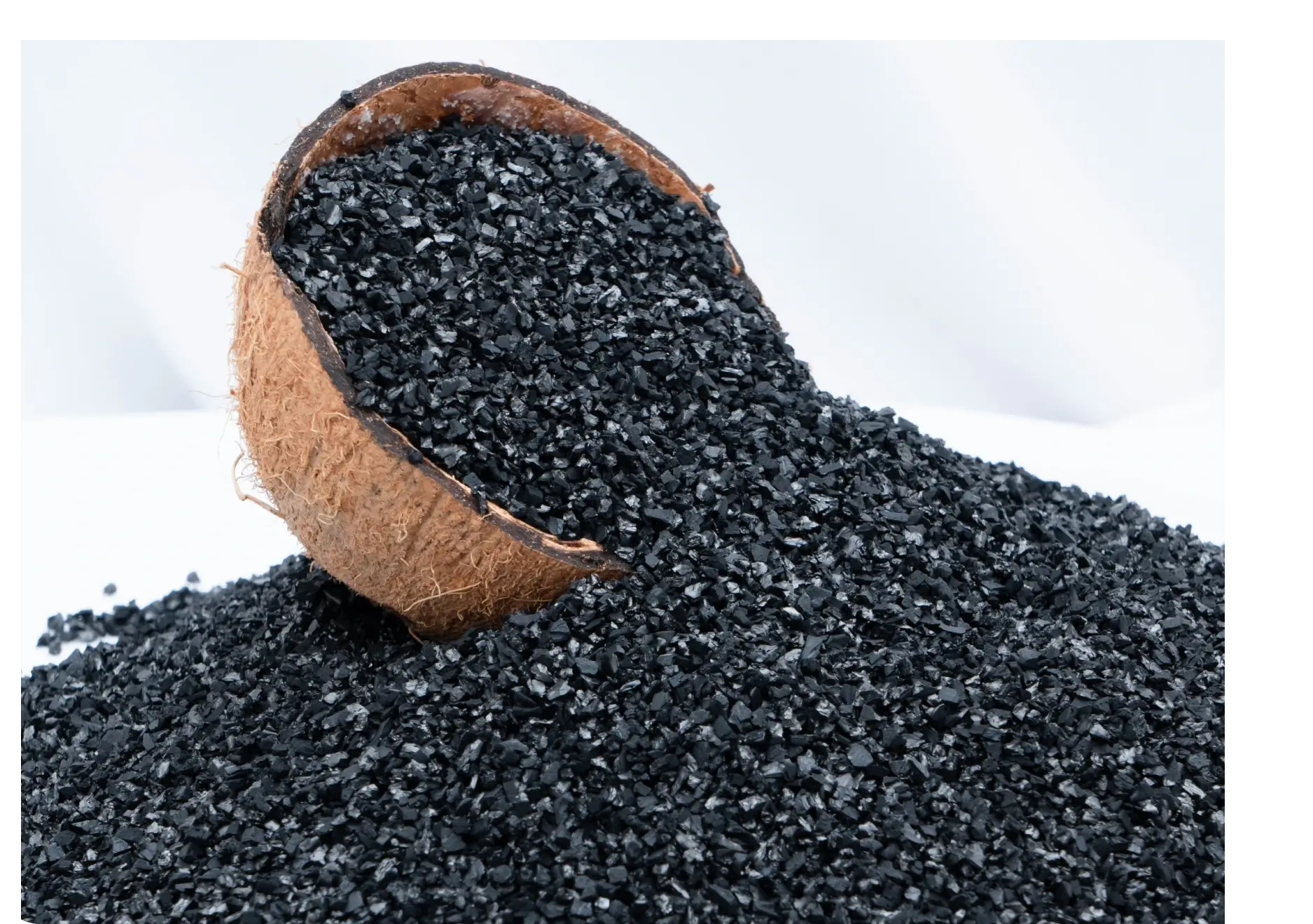
STEAM ACTIVATED CARBON from COCONUT SHELL
Certificates:ASTMAARLJISAWWA+2 more
Palakkad District, KL
Storefront →Price on request
MOQ — Lead time on requestCurrency INR
BharatSeal order protection
Secure payments
Every payment is processed via Razorpay with PCI-DSS data protection and SSL encryption. We never see your card details.
PayUPIVisaMCAmexRuPayNet BankingWalletsPay Later+ more
Money-back protection
Claim a refund if your order doesn't ship, arrives damaged, or doesn't match the agreed spec. Disputes resolved within 7 working days.
Trade Assurance — not yet enrolled by this seller
This seller has not yet activated Trade Assurance. Pay outside BharatSeal at your own risk — we recommend chatting first to verify.
Only orders placed and paid through BharatSeal can enjoy free protection by 🛡 BharatSeal Trade Assurance.
Highlights at a glance
- ✓Category: Activated Carbon
- ✓Made in Palakkad District, KL, India
- ✓Certified: ASTM, AARL, JIS
About this item
- Exclusive characteristics conferred by high quality coconut shells.
- Higher retention
- Optimized density
- Extensive internal structure
- Maximum hardness
- Excellent micro porous structure
- Low ash contents and lesser impurities
- High hardness level and low dust level – higher quality of the product
- Higher surface area – longer life of the carbon & extended adsorption capacity
Description
High Adsorption capacity
High Retention
Optimised density
Extensive internal structure
Excellent microporous structure
Low ash content
Low dust content
Maximum hardness
Coconut Shell based Activated Carbon
Coconut shell carbons tend to have much higher pore volume in the micro-porous region and a slightly lower pore volume in the macro-porous region. This is because coconut char is less amorphous (harder, more crystalline-like) than coal. The result is that coconut-based carbons adsorb smaller organic molecules such as Chloroform & other Trihalomethanes (THMs), Trichloroethylene (TCE), Carbon Tetrachloride and MTBE (Methyl Tertiary Butyl Ether) while coal-based carbons more effectively remove larger molecules such as colour-producing compounds (tannins & humics). The predominance of micropores in coconut shell carbon gives it tight structure, provides good mechanical strength & hardness and enables high resistance to attrition or wearing away by friction.
In addition, because of the high energy of adsorption of the coconut-based carbon’s micropores, once the smaller organic molecules are adsorbed, they’re very tightly retained. Therefore, coconut shell carbons in general have a higher retentivity for these types of contaminants than do other types of carbons. For these reasons, coconut shell carbons are often selected for drinking water treatment where contamination is attributed to organic solvents or disinfection by-products such as THMs. Another advantage of coconut shell carbon is that it’s typically harder and attrition resistant than coal, lignite and peat-based carbons. This can be important in applications where attrition, carbon breakage and dust cannot be tolerated, like gold refining, gas masks and ultrapure water treatment applications.
Process and Production Stages
Activated carbon is produced from coconut shells (other common raw material sources are wood, lignite, saw dust, peat, coal, petroleum residues etc. by a two-step process.
The First step in activation is to carbonize the shells to drive out about two thirds of the volatiles out of the shells creating carbonaceous mass which contains minimum 75% fixed carbon.
This carbonized base material in the second stage is activated at high temperature (850 – 900 degree) in presence of steam.
The charring process (making of charcoal) is known as the pyrolysis, which is chemical decomposition of the shell by heating in the absence of oxygen.
During the carbonization of coconut shells, volatiles amounting to 2/3rd of the mass of coconut shells on dry weight basis are released, yielding 1/3rd of the coconut shell mass of charcoal.
Carbon is then activated by a carefully controlled oxidation process in presence of steam. This results in high degree of porosity and over a broad range of pore sizes with good hardness. The specific structure of carbon gives a very large surface area which allows the carbon to adsorb a wide range of compounds. Entire activation process is without any chemical additives & fugitive emissions
IND সংরক্ষণ production facility in India has the capability to carefully control particle size distribution, adsorption capacity and other critical carbon properties as required by our customers.
IND সংরক্ষণ production facility in India has the capability to carefully control particle size distribution, adsorption capacity and other critical carbon properties as required by our customers.
Salient Features
Higher ADSORPTION & HARDNESS Sizes Available 4 mesh – 325 mesh (Standard USS mesh)
Key attributes
Certificates
ASTM
AARL
JIS
AWWA
NSF
EU
BIS
Reviews
Questions & answers
Ask the supplier — answers are visible to all buyers
No questions yet. Be the first to ask!
Know your supplier
INDCARB ACTIVATED CARBON PRIVATE LIMITED
Unverified<1 yr on BharatSealPalakkad District, Kerala
Orders completed
—
On-time delivery
—
Reorder rate
—
Year founded
2017
Staff size
—
Certifications
7
%22%2F%3E%3Ctext%20x%3D%2250%25%22%20y%3D%2250%25%22%20dominant-baseline%3D%22central%22%20text-anchor%3D%22middle%22%20font-family%3D%22'DM%20Sans'%2Csystem-ui%2Csans-serif%22%20font-weight%3D%22800%22%20font-size%3D%22126%22%20fill%3D%22%231a1a1a%22%20fill-opacity%3D%220.14%22%20letter-spacing%3D%22-2%22%3EDW%3C%2Ftext%3E%3C%2Fsvg%3E)
%22%2F%3E%3Ctext%20x%3D%2250%25%22%20y%3D%2250%25%22%20dominant-baseline%3D%22central%22%20text-anchor%3D%22middle%22%20font-family%3D%22'DM%20Sans'%2Csystem-ui%2Csans-serif%22%20font-weight%3D%22800%22%20font-size%3D%22126%22%20fill%3D%22%231a1a1a%22%20fill-opacity%3D%220.14%22%20letter-spacing%3D%22-2%22%3EWW%3C%2Ftext%3E%3C%2Fsvg%3E)
%22%2F%3E%3Ctext%20x%3D%2250%25%22%20y%3D%2250%25%22%20dominant-baseline%3D%22central%22%20text-anchor%3D%22middle%22%20font-family%3D%22'DM%20Sans'%2Csystem-ui%2Csans-serif%22%20font-weight%3D%22800%22%20font-size%3D%22126%22%20fill%3D%22%231a1a1a%22%20fill-opacity%3D%220.14%22%20letter-spacing%3D%22-2%22%3EOA%3C%2Ftext%3E%3C%2Fsvg%3E)
%22%2F%3E%3Ctext%20x%3D%2250%25%22%20y%3D%2250%25%22%20dominant-baseline%3D%22central%22%20text-anchor%3D%22middle%22%20font-family%3D%22'DM%20Sans'%2Csystem-ui%2Csans-serif%22%20font-weight%3D%22800%22%20font-size%3D%22126%22%20fill%3D%22%231a1a1a%22%20fill-opacity%3D%220.14%22%20letter-spacing%3D%22-2%22%3EFC%3C%2Ftext%3E%3C%2Fsvg%3E)
%22%2F%3E%3Ctext%20x%3D%2250%25%22%20y%3D%2250%25%22%20dominant-baseline%3D%22central%22%20text-anchor%3D%22middle%22%20font-family%3D%22'DM%20Sans'%2Csystem-ui%2Csans-serif%22%20font-weight%3D%22800%22%20font-size%3D%22126%22%20fill%3D%22%231a1a1a%22%20fill-opacity%3D%220.14%22%20letter-spacing%3D%22-2%22%3EEO%3C%2Ftext%3E%3C%2Fsvg%3E)


%22%2F%3E%3Ctext%20x%3D%2250%25%22%20y%3D%2250%25%22%20dominant-baseline%3D%22central%22%20text-anchor%3D%22middle%22%20font-family%3D%22'DM%20Sans'%2Csystem-ui%2Csans-serif%22%20font-weight%3D%22800%22%20font-size%3D%22126%22%20fill%3D%22%231a1a1a%22%20fill-opacity%3D%220.14%22%20letter-spacing%3D%22-2%22%3EPA%3C%2Ftext%3E%3C%2Fsvg%3E)
%22%2F%3E%3Ctext%20x%3D%2250%25%22%20y%3D%2250%25%22%20dominant-baseline%3D%22central%22%20text-anchor%3D%22middle%22%20font-family%3D%22'DM%20Sans'%2Csystem-ui%2Csans-serif%22%20font-weight%3D%22800%22%20font-size%3D%22126%22%20fill%3D%22%231a1a1a%22%20fill-opacity%3D%220.14%22%20letter-spacing%3D%22-2%22%3EAC%3C%2Ftext%3E%3C%2Fsvg%3E)