Polymers
Flame Retardants
West Delhi, DL
Storefront →Price on request
MOQ — Lead time on requestCurrency INR
Customization for this product
Yes, we can develop any FR-application based on requirements. We are closely working with our customers to provide them FR-solutions for several new applications based on standard, properties and functionalities.
BharatSeal order protection
Secure payments
Every payment is processed via Razorpay with PCI-DSS data protection and SSL encryption. We never see your card details.
PayUPIVisaMCAmexRuPayNet BankingWalletsPay Later+ more
Money-back protection
Claim a refund if your order doesn't ship, arrives damaged, or doesn't match the agreed spec. Disputes resolved within 7 working days.
Trade Assurance — not yet enrolled by this seller
This seller has not yet activated Trade Assurance. Pay outside BharatSeal at your own risk — we recommend chatting first to verify.
Only orders placed and paid through BharatSeal can enjoy free protection by 🛡 BharatSeal Trade Assurance.
Highlights at a glance
- ✓Category: Polymers
- ✓Made in West Delhi, DL, India
Description
We have expertise in halogen free flame retardant chemistry. We have developed highly efficient flame retardant solutions for various polymers.
RHINO•SURE MCA K-1025
Introduction: Rhinosafe MCA is Melamine Cyanurate based flame retardant which is used in Polyamides, Silicones, PBT and Thermoplastics Polyurethanes. Melamine Cyanurate, is a salt of melamine and cyanuric acid. High Nitrogen content makes it suitable to use as an effective flame retardant.
Chemical Formula :- C6H9N9O3(C3H6N6·C3H3N3O3)
Application: Rhinosafe MCA is mainly used as Flame Retardant in Polyamides. Its high thermal stability makes it ideal it to be used with Nylon 6 and 66. It can also be used in PC and PBT. It undergoes endothermic decomposition above 320°C to melamine and cyanuric acid, acting as a heat sink in the process. The vaporized melamine acts as an inert gas source diluting the oxygen and the fuel gases present at the point of combustion. It can be used alone and in combination with other FRs as FR Synerg
Dosage : Nylon Unfilled: 10-15% for UL 94 V-0
Nylon Glass Filled: 10-20% for UL 94 V
RHINO•SURE-MPP (Melamine Poly Phosphate)
Introduction: RHINO-SURE-MPP (Melamine Polyphosphate) is a polymeric salt of melamine and phosphoric moiety suitable for wide range of thermoplastics, engineering polymers and thermosetting plastics both for filled and unfilled.
Molecular Weight: 222.10 g/mol.
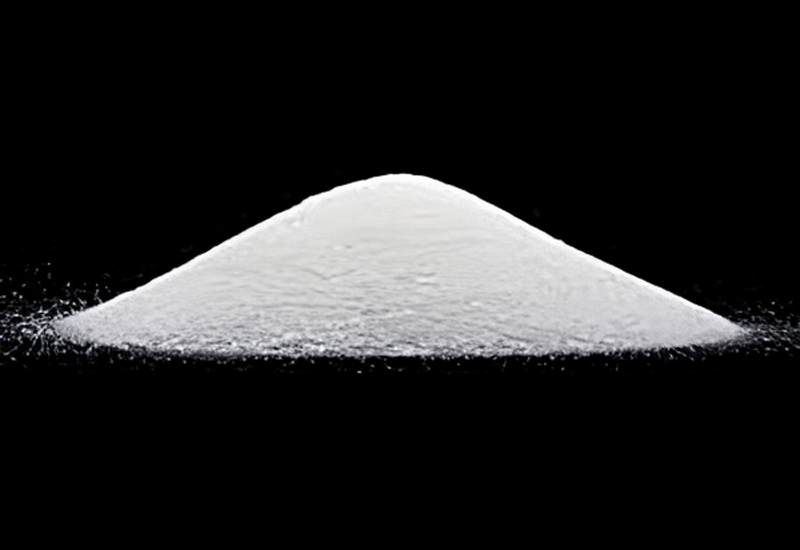
Appearance: Fine, off-white powder
RHINO•SURE-MPyP (Melamine Pyro Phosphate)
Introduction: :RHINO-SURE-MPyP (Melamine Pyrophosphate) is a polymeric salt of melamine and phosphoric moiety suitable for wide range of thermoplastics, engineering polymer, filled polymers and thermosetting plastics.
Chemical Formula :- (C3H6N6)2.H4P2O7
Decomposition Temp: > 300°C
Appearance: Fine white crystalline powder
Stability-TGA Wt. Loss (1%@300°C): 100hour, minimum.
RHINO•SURE K-1507 PC/ABS – HFFR
Introduction: This product is developed to achieve FR V0 property in PC-ABS blend where PC & ABS ratio is 70-30. This product is halogen free and comes under green FR category. Also, it has low density and it generates low smoke. Moreover, it has less impact on mechanical properties. This product offers good dispersionwhich allows smooth processing.
RHINO•SURE K-1501 FR for POLYCARBONATE
Introduction: RHINOSURE K-1501 is a complex blend of FR synergist, we call it HEF. Its halogen free and mainly used in Polycarbonate (PC).
Applications: RhinoSure K-1501 is used as flame retardant chemical in PC for V0 rating. It doesn't affect mechanical properties. It is used for non-transparent application.
RHINO•SURE-K1100 FR for PA-6/66
Introduction: RHINOSURE-K1100 is an intumescent technology-based flame retardant for PA-6/66. It is a halogen free solution for PA-6/66 with Glass Fiber for V0-ratings.
Active Ingredient: Blend of Intumescent additives with strategically selected synergists.
Appearance: White Powder
Melting Point: >260 degree Celsius
Applications: RHINOSURE- K1100 is used as an effective flame retardant for PA6/66. It is based on intumescent flame retarding technology, which reduces the generation of both dark smoke and gases during combustion. It can be used in Extrusion, Foaming, Injection Molding, Thermoforming easily, primarily for electrical & electronics applications.
Guidelines for use: (UL94 V-0, 1.6 mm): PA-6/66: 50-48%
G.F.: 30%: K-1100: 20-22 wt % | Processing Additive: 0.5-1.0%
Polymer processing should be around 220-230˚C.
RHINO•SURE-K1200 FR for PBT
Introduction: : RHINOSURE-K1200 is an intumescent technology-based halogenfree flame retardant for PBT.
Active Ingredient: Blend of Intumescent additives with strategically selected synergists.
Appearance: White Powder
Melting Point: >260 degree Celsius
Applications: RHINOSURE-K1200 is used as an effective flame retardant for PBT. It is based on intumescent flame retarding technology, which reduces the generation of both dark smoke and gases during combustion. It can be used in Extrusion, Foaming, Injection Molding, Thermoforming easily, primarily for electrical & electronics applications.
Guidelines for use: (UL94 V-0, 1.6 mm):PBT: 50-48%
G.F.: 30%: K-1200: 20-22 wt % | Processing Additive: 0.5-1.0%
Polymer processing should be around 220-230˚C.
RHINO•SURE-APP-II (Ammonium Poly Phosphate Ph-II)
Product Description: Ammonium Polyphosphate flame retardants chemical.
Formula: (NH4PO3)n
Appearance: Fine, White Powder
Applications: APP can be used in expanding fireproof material, such as polyurethane, UP resin and epoxy resin. Also used in the retardant of fibre, wood and plastics. APP is main ingredient of expanding retardant thermoplastic because of its high molecular weight and good heat stabilization. Especially used in the PP achieving UL-94 V0 for electronic unit.
Feature:
APP102 ( The molecular weight ammonium polyphosphate), the polymerization degree of which is more than 1000, is one of important non halogen flame retardants, It is hard to soluble in water, insoluble in the organic solvent, no poison and environmental protection, have good thermo stability and excellent compatibility with the polymer and the resin. APP101 is coated with melamine based on the material APP102 has lower hygroscopic after surface treatment, lower water solubility and pH value is alkaline.
2. APP103 expanding type halogen free flame retardant especially for polypropylene, containing no PBB, biphenyl oxide and toxic heavy metal.
3. APP201 mainly used in PE, EVA etc. it has outstanding dispersivity and fluidity in the resin and remains original mechanic performance of resin within the EU ROHS standard.
Frequently Asked Questions
Q1. What is the Flame-Retardant (FR) in plastics?
Flame-Retardants are chemicals which are added to combustible materials like polymers to make them more resistant to ignition, slow down combustion, impart self-extinguish property and often prevent the fire from spreading to other items.
Q2: How does Flame-Retardants works in polymers?
FR additives interfere with combustion during a particular stage of this process, e.g. during heating, decomposition, ignition or flame spread. Flame retardants reacts with fuel, absorbs heat/energy, covers combustion area by charring, diluting oxygen with non-combustible gases, and stop dripping. Our designed FRs work in two or more ways as mentioned to stopthe burning.
Q3: Can one Flame-Retardant additive be used in all types of polymers?
No, the variety of flame retardants are necessary, because each material is very different in nature and composition. For example, plastics have a wide range of mechanical, thermal and chemical properties and differ in combustion behaviour. Therefore, they need to be matched to the appropriate flame retardants in order to work according to the polymer and to retain the key material functionalities.
Q4: What is Halogen Free Flame-Retardant (HFFR) system?
Halogen free flame retardants doesn’t have halogens like Bromine and Chlorine chemicals. HFFR contains mainly Nitrogen, Phosphorous, Silicone, Inorganic Minerals, Borates, and Doped Nano-Materials etc.
Q5: What are the green and environment friendly Frs ?
Halogen Free FRs are considered environment friendly. Halogenated Frs (containing Chlorine, Bromine etc) are considered as toxic in nature and environmentally hazardous. During combustion of halogenated FRs, toxic gases are generated which are poisonous and extremely harmful to environment. That is why HFFR materials are gaining the popularity and market very fast. US, European Union, Canada, Australia, Japan and so many countries are restricting the Halogen FRs usage
Q6: Is Polynomous manufacturing the FRs or just blending/mixing it?
Polynomous manufactures/synthesizes basic Flame-Retardants. We are currently manufacturing Melamine Cyanurate (MCA), Melamine Phosphate, Melamine Poly Phosphate, Melamine Pyro Phosphate. Based on our deep know how and experience, we also make synergistic blends of halogen free flame retardants for various polymers.
Q7: What are the tests done by Polynomous?
Chemical Titrations, AAS, UV-VIS Spectroscopy, Fluorescent Spectroscopy, Thin Layer Chromatography, GC, FTIR, Solid-State Particle Analysis, UL-94, GWT, Smoke Density, CTI, LOI etc.
Q8: Why FR is important and critical to use?
Fire can cause havoc for human life and assets. Hence any measurement to curb the fire incidences are extremely important. In the developed countries, it is mandatory to use FR-products in all the public places like metro, airports, railways, hospitals, restaurants, multiplexes, malls etc. Developing countries like India are following the same direction.
Q9: Can Polynomous provide customized FR-solutions?
Yes, we can develop any FR-application based on requirements. We are closely working with our customers to provide them FR-solutions for several new applications based on standard, properties and functionalities.
Key attributes
Trade & shipping terms
Set by POLYNOMOUS INDUSTRIES PRIVATE LIMITED — the supplier's own terms.
Reviews
Questions & answers
Ask the supplier — answers are visible to all buyers
No questions yet. Be the first to ask!
Know your supplier
POLYNOMOUS INDUSTRIES PRIVATE LIMITED
Unverified<1 yr on BharatSealWest Delhi, Delhi
Orders completed
—
On-time delivery
—
Reorder rate
—
Year founded
2026
Staff size
—
Certifications
—
%22%2F%3E%3Ctext%20x%3D%2250%25%22%20y%3D%2250%25%22%20dominant-baseline%3D%22central%22%20text-anchor%3D%22middle%22%20font-family%3D%22'DM%20Sans'%2Csystem-ui%2Csans-serif%22%20font-weight%3D%22800%22%20font-size%3D%22126%22%20fill%3D%22%231a1a1a%22%20fill-opacity%3D%220.14%22%20letter-spacing%3D%22-2%22%3ESP%3C%2Ftext%3E%3C%2Fsvg%3E)
%22%2F%3E%3Ctext%20x%3D%2250%25%22%20y%3D%2250%25%22%20dominant-baseline%3D%22central%22%20text-anchor%3D%22middle%22%20font-family%3D%22'DM%20Sans'%2Csystem-ui%2Csans-serif%22%20font-weight%3D%22800%22%20font-size%3D%22126%22%20fill%3D%22%231a1a1a%22%20fill-opacity%3D%220.14%22%20letter-spacing%3D%22-2%22%3EBP%3C%2Ftext%3E%3C%2Fsvg%3E)
%22%2F%3E%3Ctext%20x%3D%2250%25%22%20y%3D%2250%25%22%20dominant-baseline%3D%22central%22%20text-anchor%3D%22middle%22%20font-family%3D%22'DM%20Sans'%2Csystem-ui%2Csans-serif%22%20font-weight%3D%22800%22%20font-size%3D%22126%22%20fill%3D%22%231a1a1a%22%20fill-opacity%3D%220.14%22%20letter-spacing%3D%22-2%22%3ERP%3C%2Ftext%3E%3C%2Fsvg%3E)
%22%2F%3E%3Ctext%20x%3D%2250%25%22%20y%3D%2250%25%22%20dominant-baseline%3D%22central%22%20text-anchor%3D%22middle%22%20font-family%3D%22'DM%20Sans'%2Csystem-ui%2Csans-serif%22%20font-weight%3D%22800%22%20font-size%3D%22126%22%20fill%3D%22%231a1a1a%22%20fill-opacity%3D%220.14%22%20letter-spacing%3D%22-2%22%3EPO%3C%2Ftext%3E%3C%2Fsvg%3E)
%22%2F%3E%3Ctext%20x%3D%2250%25%22%20y%3D%2250%25%22%20dominant-baseline%3D%22central%22%20text-anchor%3D%22middle%22%20font-family%3D%22'DM%20Sans'%2Csystem-ui%2Csans-serif%22%20font-weight%3D%22800%22%20font-size%3D%22126%22%20fill%3D%22%231a1a1a%22%20fill-opacity%3D%220.14%22%20letter-spacing%3D%22-2%22%3EPO%3C%2Ftext%3E%3C%2Fsvg%3E)
%22%2F%3E%3Ctext%20x%3D%2250%25%22%20y%3D%2250%25%22%20dominant-baseline%3D%22central%22%20text-anchor%3D%22middle%22%20font-family%3D%22'DM%20Sans'%2Csystem-ui%2Csans-serif%22%20font-weight%3D%22800%22%20font-size%3D%22126%22%20fill%3D%22%231a1a1a%22%20fill-opacity%3D%220.14%22%20letter-spacing%3D%22-2%22%3EPO%3C%2Ftext%3E%3C%2Fsvg%3E)
%22%2F%3E%3Ctext%20x%3D%2250%25%22%20y%3D%2250%25%22%20dominant-baseline%3D%22central%22%20text-anchor%3D%22middle%22%20font-family%3D%22'DM%20Sans'%2Csystem-ui%2Csans-serif%22%20font-weight%3D%22800%22%20font-size%3D%22126%22%20fill%3D%22%231a1a1a%22%20fill-opacity%3D%220.14%22%20letter-spacing%3D%22-2%22%3EPO%3C%2Ftext%3E%3C%2Fsvg%3E)