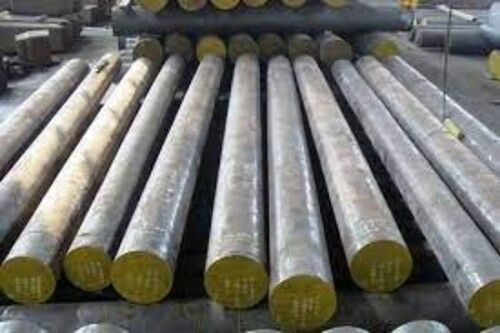
Alloy Steel
EN24
Certificates:ISO 9001:2015
Madurai, TN
Storefront →Price on request
MOQ — Lead time on requestCurrency INR
Trade & shipping
Place of originIndia
Port of loadingNhava Sheva (JNPT), Mumbai
BharatSeal order protection
Secure payments
Every payment is processed via Razorpay with PCI-DSS data protection and SSL encryption. We never see your card details.
PayUPIVisaMCAmexRuPayNet BankingWalletsPay Later+ more
Money-back protection
Claim a refund if your order doesn't ship, arrives damaged, or doesn't match the agreed spec. Disputes resolved within 7 working days.
Trade Assurance — not yet enrolled by this seller
This seller has not yet activated Trade Assurance. Pay outside BharatSeal at your own risk — we recommend chatting first to verify.
Only orders placed and paid through BharatSeal can enjoy free protection by 🛡 BharatSeal Trade Assurance.
Highlights at a glance
- ✓Category: Alloy Steel
- ✓Made in Madurai, TN, India
- ✓Certified: ISO 9001:2015
About this item
- High-strength alloy steel known for exceptional toughness, wear resistance, and fatigue strength.
- Contains nickel, chromium, and molybdenum for a strong and durable structure.
- Ideal for components that must withstand high stress, shock loads, and repeated use.
- Widely used in critical parts such as shafts, gears, bolts, spindles, and aerospace components.
- Offers good machinability in its softened state and responds well to heat treatment processes.
Description
EN24 is a high-strength alloy steel known for its exceptional toughness, wear resistance, and fatigue strength. It contains nickel, chromium, and molybdenum, which give it a strong and durable structure, making it ideal for components that must withstand high stress, shock loads, and repeated use. EN24 steel grade is typically supplied in a hardened and tempered condition but can also be heat treated to achieve various mechanical properties depending on the application. EN24 offers good machinability in its softened state and responds well to processes like hardening, tempering, and case hardening. EN24 is widely used in critical parts such as shafts, gears, bolts, spindles, and aerospace components—especially where both strength and impact resistance are essential.
Applications
- Automotive: Drive shafts, axles, connecting rods, and crankshafts
- Aerospace: Landing gear components, shafts, and structural parts
- Oil & Gas: Drilling tools, rig components, and valve parts
- Engineering & Manufacturing: Gears, bolts, spindles, couplings, and tool holders
- Heavy Machinery: Hydraulic shafts, pins, and heavy-duty fasteners
- Motorsports: High-performance engine parts and suspension components
Chemical Composition
Element Carbon (C) Silicon (Si) Manganese (Mn) Nickel (Ni) Chromium (Cr) Molybdenum (Mo) Sulphur (S) Phosphorus (P) Percentage (%) 0.36 – 0.44 0.10 – 0.35 0.45 – 0.70 1.30 – 1.70 0.90 – 1.40 0.20 – 0.35 ≤ 0.040 ≤ 0.035
Hardness
The hardness of EN24 depends on its heat treatment condition. In its most commonly used hardened and tempered state, EN24 typically achieves a hardness of:
28–36 HRC (Rockwell Hardness) when tempered for toughness
Up to 55–60 HRC when fully hardened and tempered for maximum strength
With surface treatments like nitriding or induction hardening, EN24 can reach even higher surface hardness levels—up to 60–65 HRC—while maintaining a tough, impact-resistant core. This makes it ideal for applications that need both a hard-wearing surface and internal strength.
Equivalent Grades
AISI / SAE: 4340 DIN (Germany): 1.6511 or 34CrNiMo6 DIN (Germany): 1.6511 or 34CrNiMo6 UNI (Italy): 40NiCrMo7 AFNOR (France): 35NCD6 BS (UK): 817M40 (old British Standard designation for EN24) JIS (Japan): SNCM8
Heat Treatment
EN24 is a versatile alloy steel that responds well to various heat treatment processes, allowing it to achieve a wide range of mechanical properties. Here’s how it’s typically treated:
Annealing
Heat to 820–850°C, then allow to cool slowly in a furnace.
Purpose: Softens the steel for easier machining and improves ductility.
Normalizing
Heat to 850–880°C, then cool in still air.
Purpose: Refines the grain structure and relieves internal stresses.
Hardening (Quenching)
Heat to 820–860°C, then quench in oil.
Purpose: Increases hardness and tensile strength.
Tempering
Reheat after quenching to 250–650°C, depending on desired properties, then air cool.
Purpose: Reduces brittleness and increases toughness. Lower tempering temperatures retain more hardness; higher temperatures increase toughness.
Nitriding (Optional)
Heat to 500–530°C in a nitrogen-rich environment.
Purpose: Hardens the surface (up to 60–65 HRC) without affecting the core toughness.
Induction Hardening (Optional)
Localized surface heating followed by rapid quenching.
Purpose: Provides a hard, wear-resistant surface with a tough core—ideal for components like shafts and gears.
Hardening Standard
Hardening (Quenching) Process:
Heat the steel uniformly to 820–860°C.
Hold at temperature until it’s fully heated through.
Quench in oil to rapidly cool the material.
This process creates a hardened structure (martensite), increasing the steel’s hardness up to 55–60 HRC, depending on the cooling rate and section size.
After hardening, EN24 becomes very hard but also brittle. To improve toughness and reduce brittleness, it must be tempered—this involves reheating to 250–650°C, depending on the desired final properties.
Welding
EN24 can be challenging due to its high strength and alloy content (especially nickel, chromium, and molybdenum). These elements make it prone to cracking during and after welding, particularly in the hardened and tempered condition.
Key Considerations:
Not recommended in hardened condition – Welding should ideally be done in the annealed or normalized state.
Preheating is essential – Heat the material to 200–300°C before welding to reduce thermal shock and the risk of cracking.
Post-weld heat treatment (PWHT) – After welding, slow cooling followed by stress relieving or tempering at around 600–650°C helps restore ductility and reduce residual stresses.
Use low-hydrogen electrodes or filler rods – These minimize the risk of hydrogen-induced cracking.
Machinability
EN24 offers moderate to good machinability, especially when it's supplied in the annealed or normalized condition. In these softer states, the steel can be cut, drilled, turned, and milled with standard high-speed steel (HSS) or carbide tools.
Annealed EN24: Easier to machine, ideal for roughing and general machining operations.
Hardened EN24 (quenched and tempered): More difficult to machine due to higher hardness. Requires rigid setups, slower speeds, and specialized tooling (e.g., carbide inserts).
Coolant: Use of appropriate cutting fluids or coolant is essential to avoid overheating and improve tool life.
Tool Wear: Machining hardened EN24 can lead to faster tool wear, so proper tool material and geometry are important.
Physical Properties
Property Value Density 7.85 g/cm³ Melting Point ~1425–1460°C Thermal Conductivity ~42.6 W/m·K (at 100°C) Electrical Resistivity ~0.45 µΩ·m Modulus of Elasticity ~205 GPa Specific Heat Capacity ~460 J/kg·K Poisson’s Ratio ~460 J/kg·K Thermal Expansion Coefficient ~12.3 x 10⁻⁶ /°C (20–100°C)
Chemical Properties
Property Value Corrosion Resistance Moderate, improves with heat treatment and alloying elements Hardness 250-280 HfB annealed; 55-60 HRC hardened Tensile Strength High, typically 850-1100 MPa Toughness Excellent with proper heat treatment
Key attributes
Trade & shipping terms
Set by TURIUM SPECIAL STEELS PRIVATE LIMITED — the supplier's own terms.
Certificates
ISO 9001:2015
Reviews
Questions & answers
Ask the supplier — answers are visible to all buyers
No questions yet. Be the first to ask!
Know your supplier
TURIUM SPECIAL STEELS PRIVATE LIMITED
Unverified<1 yr on BharatSealMadurai, Tamil Nadu
Orders completed
—
On-time delivery
—
Reorder rate
—
Year founded
2026
Staff size
—
Certifications
1
%22%2F%3E%3Ctext%20x%3D%2250%25%22%20y%3D%2250%25%22%20dominant-baseline%3D%22central%22%20text-anchor%3D%22middle%22%20font-family%3D%22'DM%20Sans'%2Csystem-ui%2Csans-serif%22%20font-weight%3D%22800%22%20font-size%3D%22126%22%20fill%3D%22%231a1a1a%22%20fill-opacity%3D%220.14%22%20letter-spacing%3D%22-2%22%3EAS%3C%2Ftext%3E%3C%2Fsvg%3E)
%22%2F%3E%3Ctext%20x%3D%2250%25%22%20y%3D%2250%25%22%20dominant-baseline%3D%22central%22%20text-anchor%3D%22middle%22%20font-family%3D%22'DM%20Sans'%2Csystem-ui%2Csans-serif%22%20font-weight%3D%22800%22%20font-size%3D%22126%22%20fill%3D%22%231a1a1a%22%20fill-opacity%3D%220.14%22%20letter-spacing%3D%22-2%22%3EAS%3C%2Ftext%3E%3C%2Fsvg%3E)
%22%2F%3E%3Ctext%20x%3D%2250%25%22%20y%3D%2250%25%22%20dominant-baseline%3D%22central%22%20text-anchor%3D%22middle%22%20font-family%3D%22'DM%20Sans'%2Csystem-ui%2Csans-serif%22%20font-weight%3D%22800%22%20font-size%3D%22126%22%20fill%3D%22%231a1a1a%22%20fill-opacity%3D%220.14%22%20letter-spacing%3D%22-2%22%3EAS%3C%2Ftext%3E%3C%2Fsvg%3E)
%22%2F%3E%3Ctext%20x%3D%2250%25%22%20y%3D%2250%25%22%20dominant-baseline%3D%22central%22%20text-anchor%3D%22middle%22%20font-family%3D%22'DM%20Sans'%2Csystem-ui%2Csans-serif%22%20font-weight%3D%22800%22%20font-size%3D%22126%22%20fill%3D%22%231a1a1a%22%20fill-opacity%3D%220.14%22%20letter-spacing%3D%22-2%22%3EAS%3C%2Ftext%3E%3C%2Fsvg%3E)
%22%2F%3E%3Ctext%20x%3D%2250%25%22%20y%3D%2250%25%22%20dominant-baseline%3D%22central%22%20text-anchor%3D%22middle%22%20font-family%3D%22'DM%20Sans'%2Csystem-ui%2Csans-serif%22%20font-weight%3D%22800%22%20font-size%3D%22126%22%20fill%3D%22%231a1a1a%22%20fill-opacity%3D%220.14%22%20letter-spacing%3D%22-2%22%3EAS%3C%2Ftext%3E%3C%2Fsvg%3E)
%22%2F%3E%3Ctext%20x%3D%2250%25%22%20y%3D%2250%25%22%20dominant-baseline%3D%22central%22%20text-anchor%3D%22middle%22%20font-family%3D%22'DM%20Sans'%2Csystem-ui%2Csans-serif%22%20font-weight%3D%22800%22%20font-size%3D%22126%22%20fill%3D%22%231a1a1a%22%20fill-opacity%3D%220.14%22%20letter-spacing%3D%22-2%22%3EAS%3C%2Ftext%3E%3C%2Fsvg%3E)