Back to all products
Flow Control Products
Piston Valves
Brand PennantSKU PPV
Price on request
MOQ 1 1 dayCurrency INR
Estimated delivery by 14 May 2026
Service
1-day production
Standard lead time once order is confirmed.
Highlights at a glance
- ✓Brand: Pennant
- ✓Category: Flow Control Products
- ✓Made in Sangli, MH, India
- ✓Minimum order: 1 units
- ✓Lead time: 1 day
- ✓Certified: IBR certified, ISO 9001, ISO 9001:2008
About this item
- Bubble tight (ANSI leakage class VI) shutoff
- Can be used for throttling applications
- Robust and maintenance free
- Long service life
- Effective sealing area is large, as compared to the conventional linear movement valves
- Compensates for thermal expansions with reinforced Grafoil sealing rings and Belleville washers
- Can be easily serviced inline
- Easy to repair: The only wearing parts are sealing rings which are easily replaceable
- Low cost of ownership (Cost of ownership includes maintenance, inventory cost in addition to the purchase cost)
Description
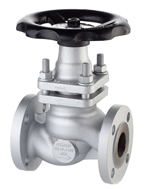
The Pennant Piston Valve (PPV) is a linear movement valve in which a stainless-steel piston travels between the upper and lower seal ring. These rings are separated by a lantern bushing, which supports the piston and creates a bubble tight seal. When the valve is in the open position, the upper seal ring in conjunction with the piston prevents leakage through the stem. In the closed position, the lower seal ring seals the valve – passage and provides a tight shutoff. Known for their extraordinary performance and long life, Piston Valves can handle a variety of media such as steam, thermal fluid, condensate and many other liquids and gasses. They can be used in on/off and throttling applications.
FEATURES
- Bubble tight (ANSI leakage class VI) shutoff
- Can be used for throttling applications
- Piston valve is robust and maintenance free
- Long service life
- Effective sealing area is large, as compared to the conventional linear movement valves
- Compensates for thermal expansions with reinforced Grafoil sealing rings and Belleville washers
- Can be easily serviced inline
- Easy to repair: The only wearing parts are sealing rings which are easily replaceable
- Low cost of ownership (Cost of ownership includes maintenance, inventory cost in addition to the purchase cost)
RANGE OF PISTON VALVES
- Cast Steel Construction :- #150, #300 as per ASME B16.34
- PN40 as per BSEN 1092-1
- Forged Steel Construction : – #800 as per ASME B16.34
Key attributes
Packaging & delivery
Certificates
IBR certified
ISO 9001
ISO 9001:2008
Reviews
Questions & answers
Ask the supplier — answers are visible to all buyers
No questions yet. Be the first to ask!