Geo Products
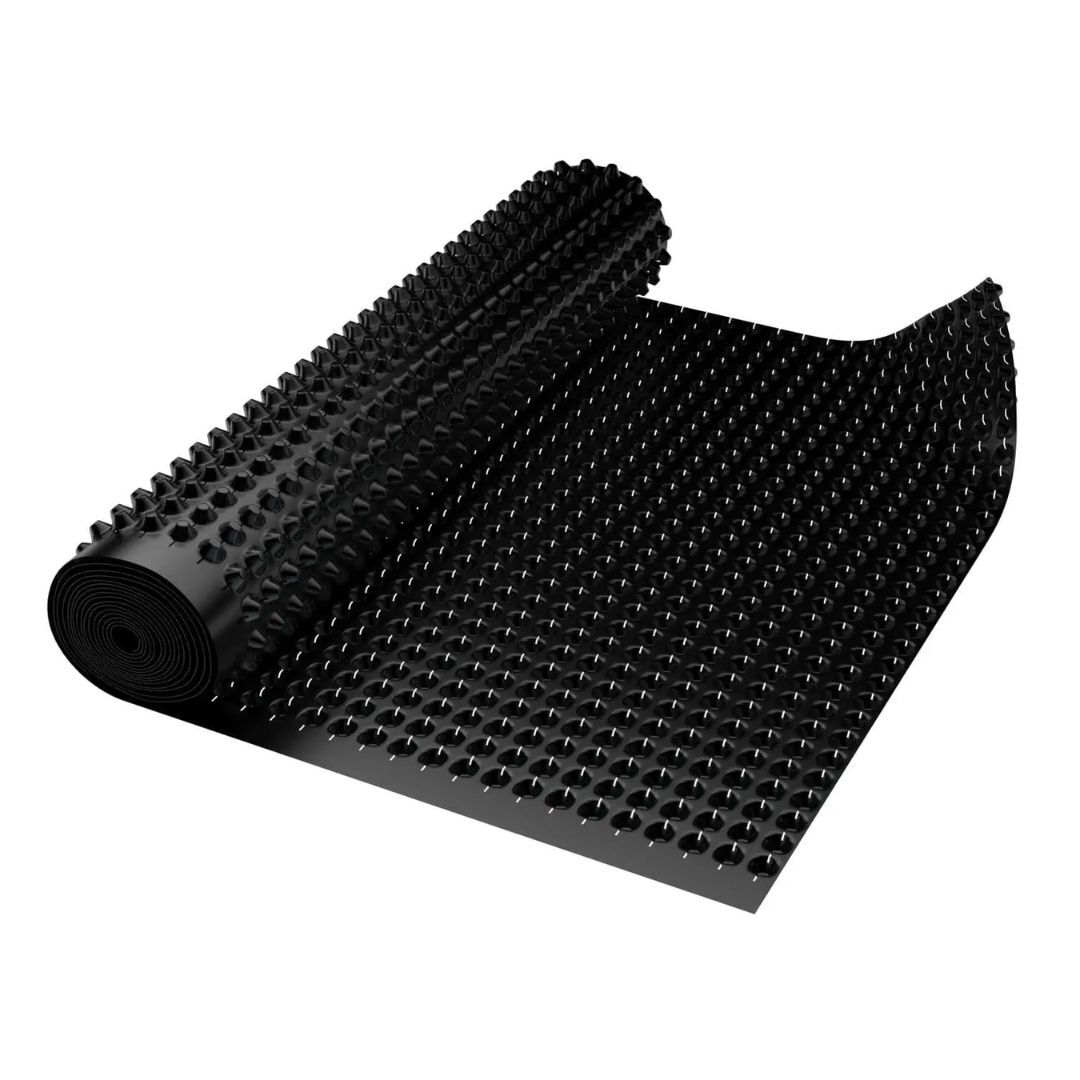
HDPE Dimple Drainage Board
Moti Bhoyan, GJ
Storefront →Price on request
MOQ — Lead time on requestCurrency INR
Customization for this product
Integrated Geotextile Layer (Optional but Standard)
BharatSeal order protection
Secure payments
Every payment is processed via Razorpay with PCI-DSS data protection and SSL encryption. We never see your card details.
PayUPIVisaMCAmexRuPayNet BankingWalletsPay Later+ more
Money-back protection
Claim a refund if your order doesn't ship, arrives damaged, or doesn't match the agreed spec. Disputes resolved within 7 working days.
Trade Assurance — not yet enrolled by this seller
This seller has not yet activated Trade Assurance. Pay outside BharatSeal at your own risk — we recommend chatting first to verify.
Only orders placed and paid through BharatSeal can enjoy free protection by 🛡 BharatSeal Trade Assurance.
Highlights at a glance
- ✓Category: Geo Products
- ✓Made in Moti Bhoyan, GJ, India
Description
High-Density Polyethylene (HDPE) Dimple Drainage Boards, or equally referred to as dimpled membranes or drainage geomembranes, are advanced geosynthetic materials of utmost importance for efficient water management in civil engineering and construction. The boards are made of a core that is produced using HDPE, having a pattern of evenly spaced, thermoformed dimples or studs.
Description
This distinct three-dimensional form leaves an air gap or void among the shape and the floor or concrete surrounding it, with fantastic in-aircraft drainage and protection for waterproofing layers. Singhal Industries is a reputable HDPE Dimple / Drainage Board Exporters in India.
Features of HDPE Dimple / Drainage Board
- Dimpled Structure: The most specific aspect is a set of high caves or spikes with one or both surfaces of the sheet. These give a continuous air difference on the Dimples installation, which acts as a very effective drainage channel.
- High-Density Polyethylene (HDPE) Material: HDPE at the origin of the board is a strong and long -lasting thermoplastic polymer. The shape of material makeup and HDPE dimple drainage trays gives them many unique features: HDPE provides: Excellent Chemical Resistance, Durability and Longevity, Impermeability.
- Integrated Geotextile Layer (Optional but Standard): Most HDPE dimple boards have a non-woven geotextile fabric heat bonded to the crests of the dimples on one face. Such a geotextile functions as a filter that will allow water to enter into the drainage void but will keep fine soil particles from entering into and clogging the drainage channels.
- Root Barrier: The thick HDPE material and the structure form a good barrier against roots of plants, stopping them from puncturing waterproofing membranes or growing into the structure.
- Vapor Barrier: The solid HDPE core is also used as a vapor barrier to stop moisture migration into structures from the ground.
- Lightweight and Flexible: Although strong, HDPE dimple boards are comparatively lightweight and provided in rolls for easy handling, transportation, and on-site installation. They can adapt to uneven surfaces.
- Temperature Resistance: They continue to perform well in a wide spectrum of temperatures, usually between -30°C and +80°C.
Benefits of HDPE Dimple / Drainage Board
- Improved Drainage Efficiency: The persistent void generated by the dimples facilitates prompt and effective in-plane draining of water, relieving hydrostatic pressure on buildings and forestalling water pooling.
- Waterproofing Membrane Protection: The dimpled board is a protective cover that prevents fragile waterproofing membranes from mechanical damage when backfilling, future soil settlement, and root intrusion.
- Decreased Hydrostatic Pressure: In a way of draining water from the structure, dimple boards remove or minimize hydrostatic pressure, one of the primary reasons for dampness, leaks, and structural damage in basements, retaining walls, and underground structures.
- Savings in Time and Cost: Replaces Granular Drainage, Increased Installation Speed, Decreased Wall Thickness.
- Increased Breathability: The air gap generated by the dimples enables the circulation of air behind the waterproofing membrane, enhancing drying of incidental water and minimizing condensation and mold growth within the structure.
- Environmental Advantages: By minimizing quarrying and transportation of natural aggregates, they are a lower carbon option and more environmentally friendly construction solution.
- Flexibility: Supplied in a range of dimple heights and with or without geotextile, they can be specified to meet specific drainage and protection needs.
- Durability: The natural durability and chemical resistance of HDPE provide a long service life with low maintenance.
Uses of HDPE Dimple / Drainage Board
- Basement and Foundation Walls: The most universal application. Installed vertically against exterior basement walls and foundations, they shield the waterproofing membrane and offer continuous drainage, averting hydrostatic pressure development and dampness.
- Retaining Walls: Employed to the rear of retaining walls to ease hydrostatic pressure, provide stability, and avoid the bowing or cracking of the wall from water buildup.
- Underground Structures: Needed in tunnels, underground parking garages, subway terminals, and utility corridors for the management of groundwater and safeguarding the structural integrity.
- Roof Gardens and Green Roofs: Essential for effective drainage of surplus water from the planting medium, avoiding waterlogging and shielding the structural roof slab against root intrusion and extended exposure to moisture.
- Podium Decks and Plaza Decks: Analogous to roof gardens, they give way to drainage under paved or landscaped sections constructed over occupied spaces.
- Civil Works and Landscaping: Sports Fields, Road and Railway Embankments, Landfill Caps, Planter Boxes, Under-Slab Drainage, Tunnel Lining Protection.
Specification
Important specifications for HDPE dimple drainage boards are:
Fabric: High-Density Polyethylene (HDPE), sporadically integrating a polypropylene (PP) geotextile.
Dimple Height / Thickness: This is a very important parameter since it determines the air gap and therefore the drainage volume. Standard heights are 6mm, 8mm, 10mm, 13mm, 15mm, and 20mm. The typical board thickness will be slightly greater than the dimple height.
Roll Dimensions: Usually supplied in rolls having a width between 1 meter and 4 meters, and length from 10 meters up to 50 meters or longer.
Weight (GSM - Grams per Square Meter): Comparative to the fabric’s weight and strength.31 Standard values are usually from 400 gsm to 1200 gsm, and the higher the GSM, the higher the strength and durability.
Key attributes
Reviews
Questions & answers
Ask the supplier — answers are visible to all buyers
No questions yet. Be the first to ask!
Know your supplier
SINGHAL INDUSTRIES PRIVATE LIMITED
Unverified<1 yr on BharatSealMoti Bhoyan, Gujarat
Orders completed
—
On-time delivery
—
Reorder rate
—
Year founded
1987
Staff size
—
Certifications
—
%22%2F%3E%3Ctext%20x%3D%2250%25%22%20y%3D%2250%25%22%20dominant-baseline%3D%22central%22%20text-anchor%3D%22middle%22%20font-family%3D%22'DM%20Sans'%2Csystem-ui%2Csans-serif%22%20font-weight%3D%22800%22%20font-size%3D%22126%22%20fill%3D%22%231a1a1a%22%20fill-opacity%3D%220.14%22%20letter-spacing%3D%22-2%22%3EGE%3C%2Ftext%3E%3C%2Fsvg%3E)
%22%2F%3E%3Ctext%20x%3D%2250%25%22%20y%3D%2250%25%22%20dominant-baseline%3D%22central%22%20text-anchor%3D%22middle%22%20font-family%3D%22'DM%20Sans'%2Csystem-ui%2Csans-serif%22%20font-weight%3D%22800%22%20font-size%3D%22126%22%20fill%3D%22%231a1a1a%22%20fill-opacity%3D%220.14%22%20letter-spacing%3D%22-2%22%3EGE%3C%2Ftext%3E%3C%2Fsvg%3E)
%22%2F%3E%3Ctext%20x%3D%2250%25%22%20y%3D%2250%25%22%20dominant-baseline%3D%22central%22%20text-anchor%3D%22middle%22%20font-family%3D%22'DM%20Sans'%2Csystem-ui%2Csans-serif%22%20font-weight%3D%22800%22%20font-size%3D%22126%22%20fill%3D%22%231a1a1a%22%20fill-opacity%3D%220.14%22%20letter-spacing%3D%22-2%22%3EGF%3C%2Ftext%3E%3C%2Fsvg%3E)
%22%2F%3E%3Ctext%20x%3D%2250%25%22%20y%3D%2250%25%22%20dominant-baseline%3D%22central%22%20text-anchor%3D%22middle%22%20font-family%3D%22'DM%20Sans'%2Csystem-ui%2Csans-serif%22%20font-weight%3D%22800%22%20font-size%3D%22126%22%20fill%3D%22%231a1a1a%22%20fill-opacity%3D%220.14%22%20letter-spacing%3D%22-2%22%3EGT%3C%2Ftext%3E%3C%2Fsvg%3E)
%22%2F%3E%3Ctext%20x%3D%2250%25%22%20y%3D%2250%25%22%20dominant-baseline%3D%22central%22%20text-anchor%3D%22middle%22%20font-family%3D%22'DM%20Sans'%2Csystem-ui%2Csans-serif%22%20font-weight%3D%22800%22%20font-size%3D%22126%22%20fill%3D%22%231a1a1a%22%20fill-opacity%3D%220.14%22%20letter-spacing%3D%22-2%22%3EGE%3C%2Ftext%3E%3C%2Fsvg%3E)
%22%2F%3E%3Ctext%20x%3D%2250%25%22%20y%3D%2250%25%22%20dominant-baseline%3D%22central%22%20text-anchor%3D%22middle%22%20font-family%3D%22'DM%20Sans'%2Csystem-ui%2Csans-serif%22%20font-weight%3D%22800%22%20font-size%3D%22126%22%20fill%3D%22%231a1a1a%22%20fill-opacity%3D%220.14%22%20letter-spacing%3D%22-2%22%3E3G%3C%2Ftext%3E%3C%2Fsvg%3E)
%22%2F%3E%3Ctext%20x%3D%2250%25%22%20y%3D%2250%25%22%20dominant-baseline%3D%22central%22%20text-anchor%3D%22middle%22%20font-family%3D%22'DM%20Sans'%2Csystem-ui%2Csans-serif%22%20font-weight%3D%22800%22%20font-size%3D%22126%22%20fill%3D%22%231a1a1a%22%20fill-opacity%3D%220.14%22%20letter-spacing%3D%22-2%22%3EGE%3C%2Ftext%3E%3C%2Fsvg%3E)